
Keilton+autani · Sensors
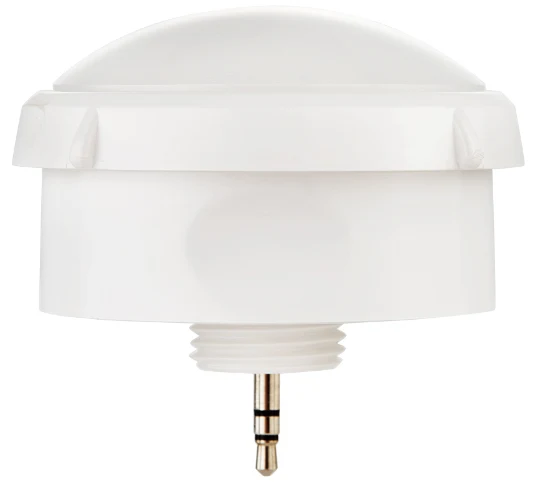
EFS106
High-Bay Sensor with AUX Interface (12 V DC)
Low-voltage high-bay sensor for LLLC/NLC5 – PIR + daylight, 6 to 12 m mounting height, plug-and-play.
DetailsSmart lighting
Building Robotics Europe provides smart lighting for non-residential buildings: sensors, app-based lighting management and monitoring – retrofitted to your existing LED luminaires with 0-10 V or DALI drivers. Survey, installation and commissioning from one source.
Definition
Smart lighting is lighting that knows when and how much light is needed. Sensors on or in the luminaires report whether anyone is in the area and how much daylight is available. The luminaires then dim, switch off or hold a background level automatically – and every setting can be changed and analysed in an app.
The difference to a simple motion detector: smart lighting does not just switch on and off – it dims smoothly, works in zones and delivers data. That is exactly what Article 13 of the EU Energy Performance of Buildings Directive (EPBD) and, in Germany, Section 56 GModG require for larger non-residential buildings – see Lighting and the EPBD.
Our core
If the LED driver has a 0-10 V or DALI interface, we fit the sensor directly to the existing luminaire.
Learn moreSensors and luminaires network via Bluetooth Mesh – ceilings and trunking stay closed.
If high-bay luminaires lack a 12 V output, we use the EFS104 with its own power supply and relay.
Learn moreGroups, background light, hold times and daylight levels are set in an app – no programming device.
Every project runs with the AU-Manager: occupancy, zones and energy per area, also via BACnet/IP to the BMS.
Learn moreAutomatic lighting control with zoning and occupancy detection, as required by EPBD Article 13.
Learn moreLighting management in an app
Each luminaire is set up with the Keilton+autani app: add the sensor, assign it to a group, define background light, hold time and daylight level. Later changes – for example when a tenant moves – take minutes.
All zones come together in the AU-Manager: schedules and settings on the floor plan, occupancy and burn hours per area, remote access via the Autani portal and, if required, data to the building management system via BACnet/IP.
The difference
All new
With Building Robotics
Process
We check luminaires, drivers, ceiling heights and use on site.
We plan the sensor grid and zones in Sensora – you see the result in advance.
Learn moreOur team installs during operation, area by area.
Set-up in the app, handover with monitoring in the AU-Manager.
Sensors
Keilton+autani · Sensors
High-Bay Sensor with AUX Interface (12 V DC)
Low-voltage high-bay sensor for LLLC/NLC5 – PIR + daylight, 6 to 12 m mounting height, plug-and-play.
Details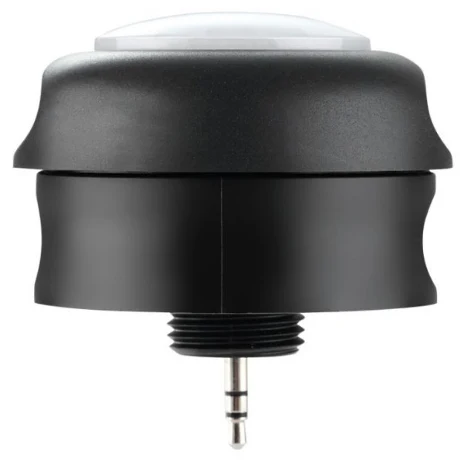
Keilton+autani · Sensors
Rugged IP66 High-Bay Sensor with AUX Interface
Weatherproof high-bay sensor (IP66) in a UV-resistant black housing – for outdoor use, damp locations and 6 to 12 m height.
Details
Keilton+autani · Sensors
High-Bay Sensor with Integrated Power Supply (120–277 V AC)
PIR high-bay sensor and controller with power supply for 6 to 15 m mounting height – relay up to 6 A plus 0-10 V dimming.
Details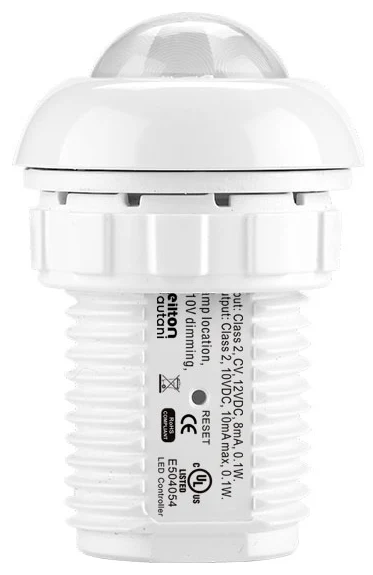
Keilton+autani · Sensors
Round Indoor Sensor for LLLC
Compact Bluetooth luminaire sensor with PIR and daylight harvesting – turns standard luminaires into smart ones (up to approx. 5.5 m).
Details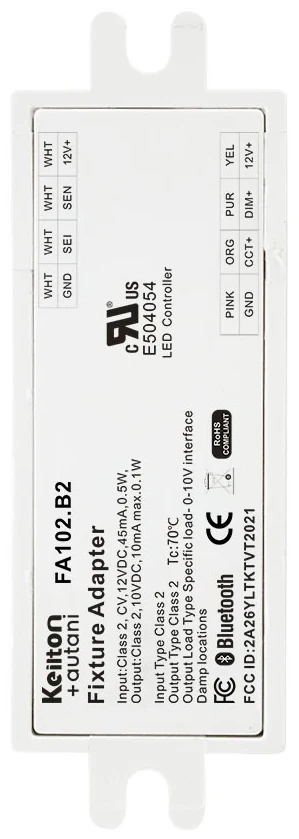
Keilton+autani · Controller & Gateways
Bluetooth Node for Luminaires (LLLC)
Miniature Bluetooth node for luminaire integration – 0-10 V dimming, sensor-ready for Eco sensors.
Details
Autani · Controller & Gateways
Autani Manager – EnergyCenter®
Central energy management controller for lighting, HVAC and metering – multi-protocol (Bluetooth, Zigbee, EnOcean, BACnet/IP).
DetailsNo results – start the sensor finder.
FAQ
Building Robotics Europe, based in Leipzig, designs, supplies, installs and operates smart lighting for offices, warehouses, retail and public buildings across Germany – with Keilton+autani sensors and lighting management and monitoring in the AU-Manager. Our focus is retrofitting existing LED luminaires.
Article 13 of the EPBD (Directive (EU) 2024/1275) requires non-residential buildings above the threshold to be equipped with building automation and automatic lighting control with zoning and occupancy detection. It becomes binding through national law – in Germany through Section 56 GModG, with a deadline of 31 December 2029. Details in Lighting and the EPBD. General information, not legal advice.
As a guide from our projects: where LED is already installed, sensors alone typically save more than 60 % of lighting electricity; combined with an LED upgrade up to 90 %. Estimate your figures in the savings calculator.
No. The sensors work autonomously in their groups, are set up in an app and analysed in the AU-Manager. If a BMS exists, data can be passed on via BACnet/IP.
Free initial consultation
Send us photos of the luminaires or the driver datasheet – we will tell you how your lighting becomes smart.
Tip: try “high bay”, “IP66” or “daylight”.